Protecting the Places That Make Fort Thomas Special

Upcoming & Ongoing Events
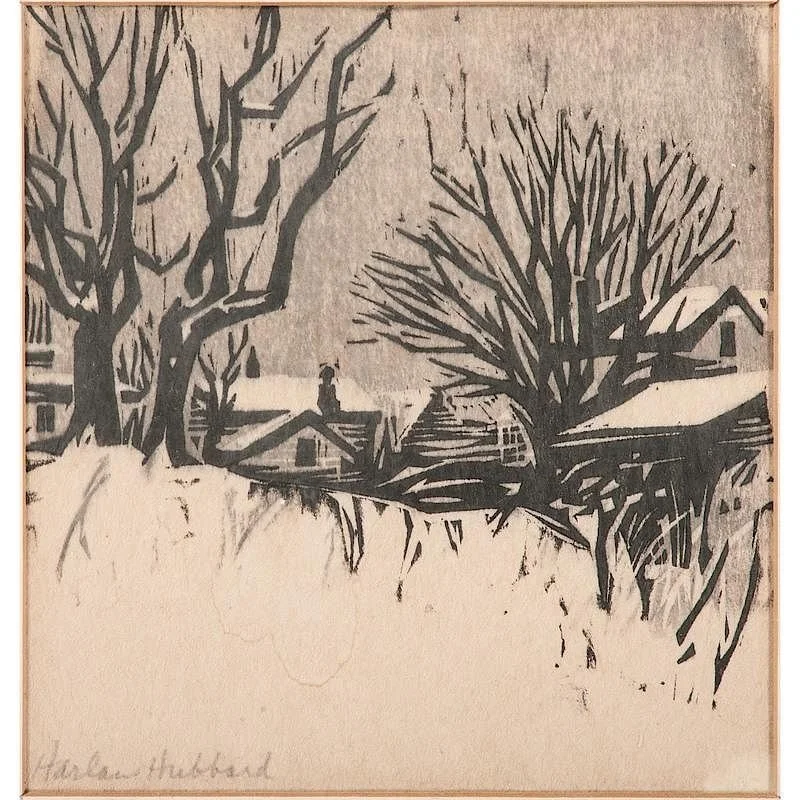
Harlan Hubbard Open Studio
Open Studio July 18, 2026 | 10am - 1pm
Visit with Jason French, Curator of Collections at the Behringer-Crawford Museum, as he discusses Harlan’s woodcuts and the cards he and Anna created from them that became treasured correspondence for many of their friends. There’s so much to learn from Jason. We can’t wait for this visit!
Caring for the Native Garden
Join us Tuesdays 9am - 11am and Thursdays 6:30pm - 8pm
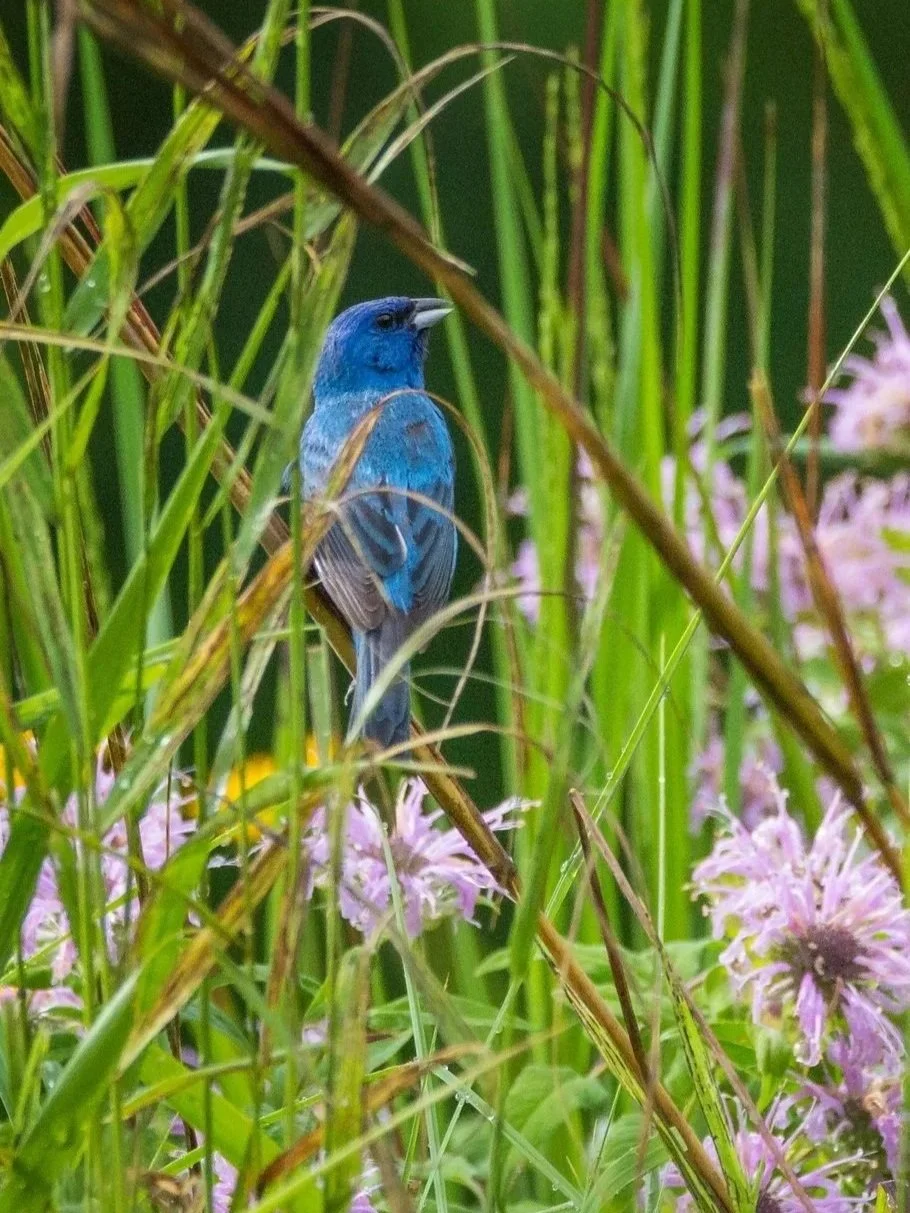
Volunteers in the Model Native Garden play a hands-on role in caring for a space that highlights the beauty and resilience of Kentucky’s native plants, shrubs, and trees.
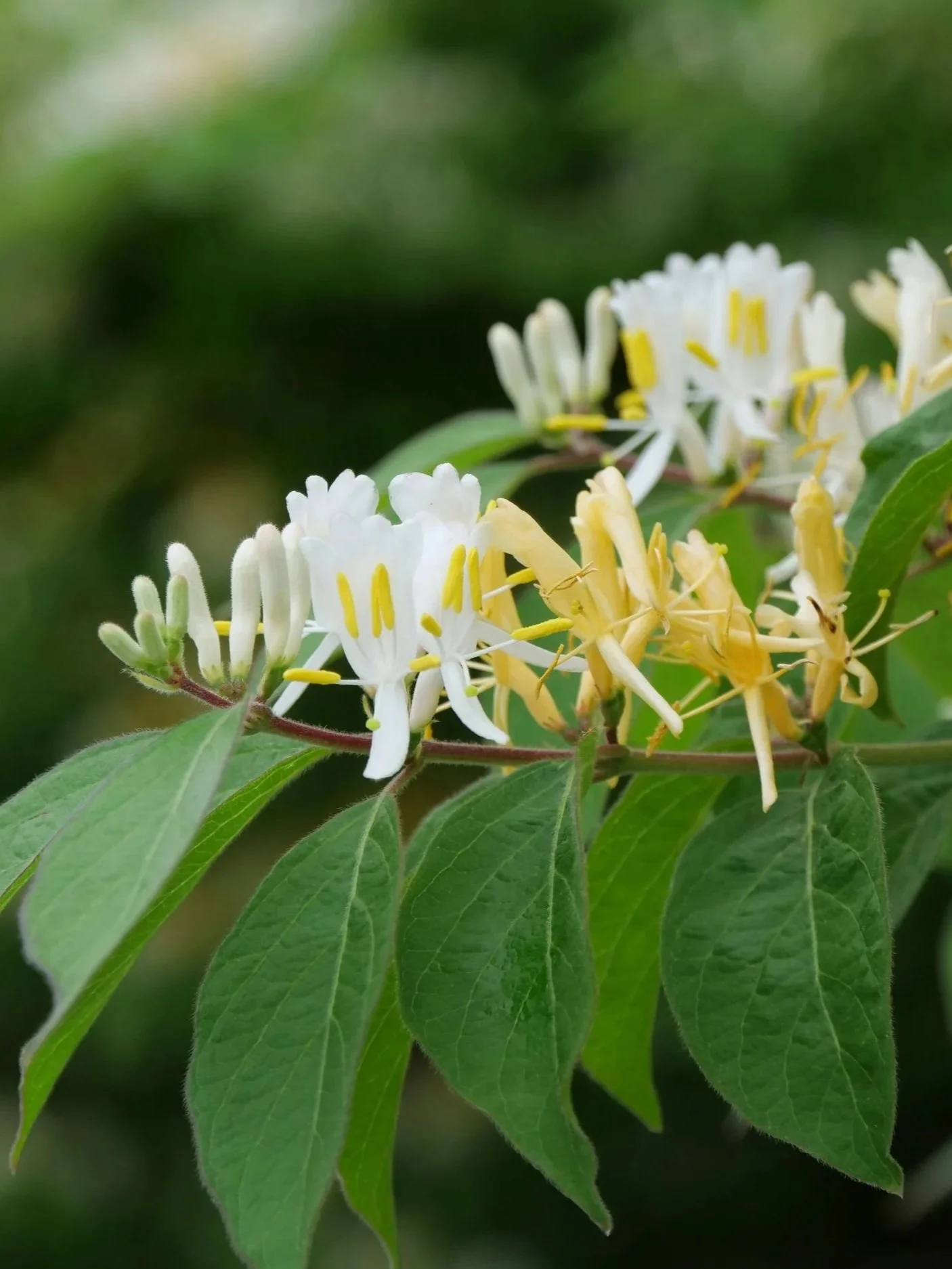
Honeysuckle Removal Session
Join us for a hands-on stewardship days focused on removing invasive honeysuckle and restoring the health of our local woodlands. Amur and bush honeysuckle may look harmless, but they spread aggressively, forming dense thickets that crowd out native wildflowers and tree seedlings.
Recent Project: Reforest Northern Kentucky
Reforest Northern Kentucky is an annual, all-volunteer project organized by Northern Kentucky Urban Community Forestry Council (NKUCFC) to restore native Kentucky woodlands. The reforestation project is responsible for planting thousands of tree seedlings on public, protected, and previously-mowed properties in Boone, Campbell, and Kenton Counties.
After years of deliberation about what should become of our property on River Road, we decided to work on re-foresting the land. We were fortunate to have the partnership of the Northern Kentucky Urban and Community Forestry Counciil, along with the planting guidance of our emeritus board member Mark Leopold.
Many of Mark’s former students from the NKU Center for Environmental Restoration are pictured above. They showed up in big numbers and got the job done. Check our facebook and Instagram pages for more photos and a drone video of the event and the many (80!) volunteers who worked to get nearly 200 trees into the ground.
If you’d like to visit the River Road site and check out the plantings and the view, contact board@ftfc.
We’d love to show you!

GET INVOLVED!
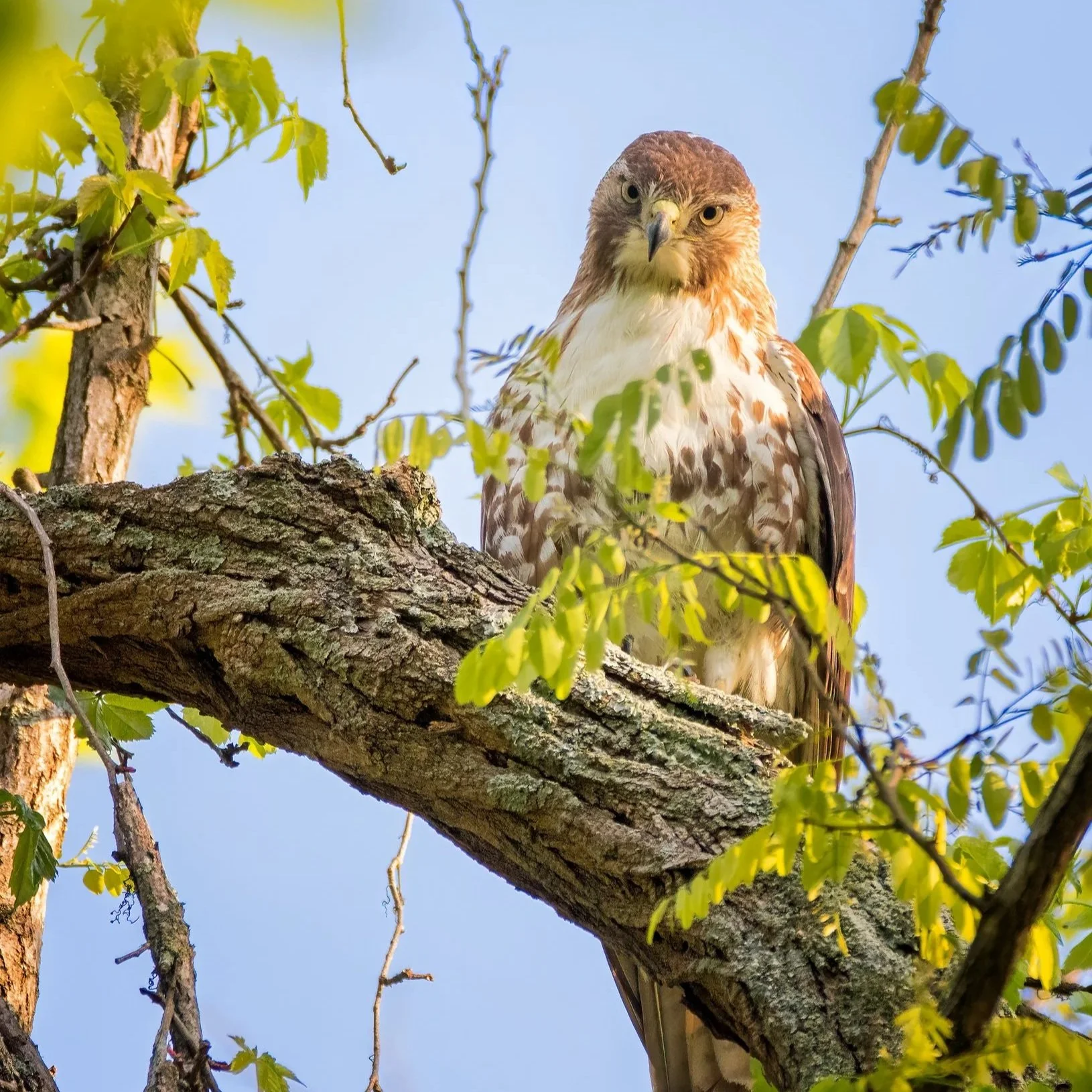
Red-Tailed Hawk photo by Leonard Beck Photography
We are a 501(c)3 land trust. Our mission is to protect our surrounding forests, encourage and/or oversee conservation easements, educate the public, develop community activities, and work with the city on numerous environmental projects. When you become a member of the Fort Thomas Forest Conservancy you are making a statement that our forests are valuable to our way of life and that they need protection.
As a member, we encourage you to volunteer for any of our activities or get involved in one of our ongoing projects: Earth Day, Model Native Garden, eradicating honeysuckle and other invasive plants in Tower Park and helping with ecological restoration work along River Road, Hubbard Studio and Preserve, conservation easement/management, fundraising or you can allow your annual membership dues to work for you. Contact board@ftfc.org.
Did you know?
• Fort Thomas’ land area is 3,661 acres and 31% of it is still forested.
• About 86 acres are considered high quality (large crown) forest and another 200 acres are medium quality (medium crown) forest.
• We have nearly 4 miles of land fronting the Ohio
River.
• Our forests are threatened by invasion of non-native plants, insects, and diseases and pressure from urbanization.
• Measurable benefits of forests include biological diversity, air quality improvement, noise, and light buffering, property values, and lower crime.
• Other benefits related to recreation, outdoor education, wildlife habitat, natural heritage, and community way of life.
Every forest tells a story. From the smallest insects to the tallest trees, this glimpse into Fort Thomas’s woodlands reveals why protecting these habitats matters.
Video by Leonard Beck.
Fort Thomas Forest Conservancy: Origins & Early History
By Bert Thomas1
The Fort Thomas Forest Conservancy (“the Conservancy”) recently celebrated eleven years (2009) of active service to the community of Fort Thomas. In this relatively brief period, the Conservancy has chalked up many important successes that benefit the citizens of Fort Thomas and surrounding areas. These include preservation of at least 30 acres of public and private land through gifts and conservation easements, preserving the Harland Hubbard art studio as a historic site, creation and management of a Model Native Garden in Tower Park to educate the public on the importance of planting species native to this portion of northern Kentucky and promoting many events related to its conservation mission including invasive species eradication days, nature and birding hikes, public meetings, picnics, garden tours, and crafts fairs. Remarkably, all of this has been accomplished without a paid staff through the hard work of an active board of directors and scores of volunteers who have pitched in countless hours of inspired work, funding from community grants and member donations and support from the city government.
Fort Thomas with a population of more or less than 16,000 people is a small city to have its own land conservancy. Typically, land conservancies have broad territorial missions focused on protecting specific natural areas, or dedicated to county, state or national jurisdictions. So how did the Conservancy come about? Why Fort Thomas and what spurred its formation at the time? It is an interesting story with an eclectic mix of personalities and skills and background involved from the start. This brief look back at the beginnings and early formation days helps answer those questions.
There was a mostly unspoken sense of unease about development in Fort Thomas in the mid-2000s. This was a time of a major housing boom nationwide, and just before the housing bubble burst in late 2008. There had always been development in the city from the earliest days as it expanded north and south from the center. But for the most part, the pace of home construction was slow and each house was individual with a unique charm and architecture. An example is Barrett Drive. I know about this street, because my grandfather Claude W. Johnson and another local businessman Leslie Gardner -- both lived in the Oak Ridge/Riverside Parkway section – partnered to purchase a 27-acre parcel of land in the northern part of town for residential construction. It was the Oscar Barrett property. They bought the property in 1928 and only five homes had been constructed there by 1950. Johnson and Gardner were not developers or builders; they just sold lots to individuals who found their own architects and builders. This was pretty typical for the city. Townspeople were accustomed to a generally sleepy, slow-paced growth.
That was beginning to change around 2005-2007, as developers acquired land on the fringes of the city and made plans to build relatively high density neighborhoods. There was not much land left in the main parts of the city, but large areas of forested land existed all around the edges. In a matter of just a couple years, construction equipment started transforming wooded hillsides, removing trees and putting in streets.
It was not uncommon in the summer of 2007 to see clouds of dust hovering above the edges of Fort Thomas. Construction started for an apartment complex along Memorial Parkway in plain view of commuters and shoppers heading to Cincinnati. Next to the Highland Country Club hillsides were being stripped of their trees in preparation for roads and houses. An immense swath of dense forested hillside off Chesapeake Avenue on the western fringe of the city was being developed. A chunk of prime land above Covert Run had fallen to development. And most visible to everyone driving along I-471 into Cincinnati, excavators had carved up a hillside of old homes so a new shopping center could be built. Although this was in Newport, it was starkly visible and showed how engineering improvements could transform hillsides previously believed unavailable for development.
Fort Thomas has always been noted for its wooded hillsides. It has nearly four miles of forested land along the Ohio River and many residential streets are on ridges and behind most houses are woods. The Campbell County Forest Quality Assessment report prepared by NKU's Center for Applied Ecology, published in August 2008, noted that Fort Thomas had more acres of urban forests in Campbell County (1146 acres or 31 percent of the city) and significantly more high quality or Large Crown forests (86 acres) than any of the 13 municipalities in the county. If you grew up in Fort Thomas, you played in the woods, and that experience was etched into your psyche. The woods were part of your identity, if only subconsciously.
More than any other factor, it was the increased pace of development that served as kindling for the formation of a movement to protect Fort Thomas’s dwindling forests. All that was needed was a spark.
Although my first cousin Bill Thomas and I co-founded what is now known as the Fort Thomas Forest Conservancy in late summer 2008, the story is complicated. The inspiration for having a conservancy in the city actually emerged eight months earlier from a well-crafted think piece written by Frank Renfrow titled “The Fort Thomas Conservancy” dated January 25, 2008, proposing the formation of an organization by that name. Frank, a relative newcomer to the city, was a piano tuner, song writer, musician, naturalist and avid birder. The proposal circulated in emails and generated lots of interest. It lamented development in the city, the stripping of trees from the hillsides and proposed the preservation of natural areas and greenspace, sensible wildlife management and development of park amenities.
Bill forwarded the document to me in an email he titled “Absolutely Awesome!” The idea resonated, and almost immediately a small group of interested residents coalesced around the initiative. We met in different places, and I hosted some of the meetings at my house on Barrett Drive in February and March 2008. There were usually about seven or eight of us around a table with Frank as board chair and I as president.2 We incorporated the organization, created a bank account, made progress on the bylaws, and planned a public meeting for late April. But shortly before that meeting, our working group disintegrated for various procedural and other reasons and the organization ceased to function.
Having discovered from that first effort that there was interest in and support for a land conservation movement in Fort Thomas, over the summer of 2008 Bill and I decided to start from scratch with a completely new organization. This time, we wanted to get all the fundamentals completed before presenting it to the public. I used an online legal service to create the incorporation documents, in August 2008. To distinguish the organization from its predecessor I added “Forest” to its name and filed the Articles of Incorporation with the state of Kentucky a month later. That done, Bill and I, while on a trip to family cottages in northern Michigan that fall, met with staff of the Leelanau Conservancy, one of the most successful such organizations in the country. We left there with a better understanding of what lay before us and a binder of information provided all new board members of that organization including a copy of its bylaws.
Over the next few months, poaching language and structure ideas from those bylaws, I crafted our own bylaws. Kentucky required new corporations to start with at least three or four board members. Bill wanted me to take the lead so I became chairman and he the vice chair and we added my wife and a mutual friend to flesh out the formation board. It was that small, temporary body that approved the bylaws in January 2009, and shortly afterward the two others stepped down. So before we formally announced the existence of the Fort Thomas Forest Conservancy, there was a board of directors, the bylaws had been written and approved and legal filings had been completed. By getting that administrative work done ahead of time we helped smooth the way forward.
With the bare bones foundation laid, the forming board created a Steering Committee to which we would invite anyone who was interested in taking part. We set 12 February 2009 for its first meeting. Finding a place for our first meetings was easy. Directly behind the house Bill had bought in early 2006 was a one-room brick structure built in 1938 by the naturalist, author and artist Harlan Hubbard for his art studio. Harlan had also built the main house for his mother and him to live in. The studio had electricity and a wood stove and seemed perfect for our meetings. Not only was it just the right size, it had historical and cultural significance for Fort Thomas and a nice atmosphere. But it needed decluttering and a good cleaning and the door wouldn’t latch. We salvaged a table and a couple lamps from my house and Bill furnished another table and a bunch of chairs. Unsure of the safety of the wood stove, we brought in an old electric heater but at least once we had a fire in the stove. It was February, after all, and the nights were cold. This became what we called our “club house” for meetings over the next few months.
With a meeting date and location determined, we needed to get the word out. We had an email list of people who had expressed interest in forming a conservancy and used that and phone calls to announce the first meeting. On the day of the meeting, Bill and I, with help and encouragement from a couple others, got the studio ready for the gathering. Believing that no good meeting in the evening hours works well without a bottle of wine somewhere around, I made sure we started this off on the right foot, and from then on while I chaired the board there were always one or two bottles of wine available nearby and meetings generally went smoothly with conviviality.
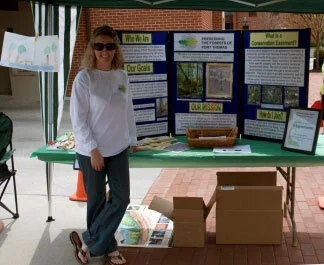
Our booth at our first Earth Day event, April 2009. Teresa Hill and I shared duties.
That meeting was a landmark for the Conservancy and now can be considered a historical event. Not only did it mark our functional, operational existence, it demonstrated that the Conservancy was real and had a clear purpose. And it brought together likeminded people intent on volunteering and helping the community. The only document I have for that night is my original agenda. Meant as a starting point for discussion, it proposed a list of things that had to get done and recommended the establishment of committees for various programs. Among the must-do items were setting up a website (I had already reserved the ftfc.org domain name), raising community awareness, attracting members to help fund startup costs, designing a logo and so on.
For the next four months, the Steering Committee met at the art studio every one or two weeks or so. Momentum was key to establishing a presence in the community and for developing camaraderie among those who wanted to serve on the committee. No one was excluded. Each meeting had an agenda and finished with action items.
Steering Committee attendance fluctuated but there was no lack of enthusiasm and willingness to pitch in. Key players were:
Mark Leopold, a city native with deep background in environmental and forestry programs. He worked for the Center for Applied Ecology at Northern Kentucky University providing leadership in the Center’s stream and forest restoration projects. Mark also volunteered in various capacities with other local non-profits.
Teresa Hill, a city native with a Ph.D. in epidemiology and deep interest in conservation initiatives with her husband Donavan Hornsby.
Donavan Hornsby, a city native, husband of Teresa, and tech executive. Donavan brought organizational and technical skills and was also a strong supporter of conservation values.
Deborah Hopkinson. Deb had recently moved to Ft. Thomas. She was chief appraiser in the real estate branch of the Army Corps of Engineers with experience in conservation easement evaluation.
Stephanie Graves, a Ft. Thomas native. She was working for a non-profit and served on its board of directors. Stephanie also participated in the earlier conservancy movement.
Linda Rankin, a lifelong resident of the city and retired English teacher at Highlands High School. Linda kept the minutes of our meetings and was involved in the first attempt at forming a conservancy.
Steve McLane, lifelong resident of Ft. Thomas, local businessman, and active community volunteer and organizer. Steve had helped Bill Thomas build the Ft. Thomas Tree Trail.
Trish Schroeder, a native of the city and active in Go Green, a local environmental organization at the time.
Carol Marnell, a local artist with expertise in graphic design. She created the Conservancy’s logo.
Terry Dunham, a longtime resident who lived nearby. Terry had loads of marketing experience.
Bill Thomas, co-founder, my cousin and lifelong resident and environmental activist. Bill owned a local newspaper that provided extensive publicity for the Conservancy. He was also active in the first conservancy attempt.
Bert Thomas, co-founder and born and reared in the city and had recently returned from work in foreign service for the federal government. Active in the first conservancy attempt.
Among others involved in various ways in the early days were Beth Laskey, Laurie Burnham, Linda Docter, April Laskey, and Kathi McMath. I’m sure I’ve missed noting others.

This sign tooki a lot of work to get. It had to conform to the city sign design and get city approval and it wasn’t cheap. But we got it done and it looked great.
We had a surprisingly large number of people attend that first public meeting, perhaps 40 to 50. I did the introductions and several of us spoke. The audience seemed interested and supportive. We all judged the evening a big success.
That spring, Bill and I accepted an invitation to talk about the Conservancy on a local TV show. It was about a 15-minute segment, and the two of us prattled on about how it all started and its mission. When I picked up Bill to head to the TV studio in Covington, we noticed that we had both worn blue shirts, remembering that in black and white TV days blue shirts were what you wore for television. Of course, the show was in color so it didn’t matter but we had a good laugh.

Steve McLane planting at the Garden.
Getting a non-profit organization started is a major undertaking. First is incorporation, then writing bylaws, finding supporters, drumming up interest in the mission, organizing a board of directors and the most challenging task, getting tax exempt status from the Internal Revenue Service. I got the forms, learned the procedures and, working with the board, began writing our justification. That started in July 2009 and it wasn’t until April 9, 2010, that we received our tax exempt letter from the IRS.
The letter opened the door for tax exempt donations and for asking for grants. We got a grant of $17,000 from the Greater Cincinnati Foundation at the end of 2010 and applied and received several other grants from the county over the next few years.
So, in a snapshot this is how the Fort Thomas Forest Conservancy came to be. There is so much more to tell about the early years, all the work everyone did to get it going, the fun we all had, the wine laced meetings, our book club, appearances before the city council, the monthly “Conservancy Matters” articles published in Bill’s paper, the collaboration, the hard work of the Land Protection and Stewardship committee which met frequently at Stephanie’s house and always with purpose, designing the logo, creating the Model Native Garden and designing and getting funding for the beautiful sign for it in Tower Park, the honeysuckle pulls, a retreat or two, making brochures, getting members, Bill’s Garden Tours, and much more.

Great post-Garden Tour party at Bill and Sidney’s house. Sidney is center-left wearing black top; Bill far right next to Steve and Jeri McLane (Mark Leopold just behind them) and Lori Holladay seated, center, in black, just in front of Stephanie Graves. We had a great time, as is evident.

Linda Rankin hosted a board offsite at her place in the country. Yes, that’s co-founder Bill Thomas keeping us all laughing.

Here we are (timed shot) in the Harlan Hubbard studio in one of the early Steering Committee meetings. L – R, Bert Thomas, Trish Schroeder, Teresa Hill, Stephanie Graves, Beth Laskey and Bill Thomas. Notice the reading glasses.

After one of our honeysuckle pulls along the Tree Trail. L-R, Larry Holladay, Donavan Hornsby, Steve McLane and Teresa Hill
Our meetings would all begin at 7 pm, and on February 12th 2009 it was already dark at that time. For that first meeting Bill arranged a row of sheltered candles along the path leading around his house to the studio door to light the way. One by one guests arrived, but some had to be guided across the uncertain grassy walkway. We had no idea who would come and although there was a signup sheet at the door, I have no official record of attendees at that first meeting, but I think there were at least 12 to 15 people and there was electricity in the air. I presided at the end of the two tables butted together, an old table lamp provided a dim light, it was a bit smoky from the leaky wood stove but almost warm enough and everyone had a copy of the agenda. It might have looked like a band of revolutionaries had gathered to plot the overthrow of the established order.

Part of a group of a Conservancy hike led by Bill Thomas (center, with clipboard) on the Tree Trail. I can’t name everyone but Donavan Hornsby hoists a son, far left, and Steve McLane holds a grandson, right.

We had annual picnics for ourselves and members at Tower Park. Here is Terry Dunham holding forth.

Lee Barringer enjoying some of our potluck picnic fare.

Another honeysuckle pull with some of our regulars. L-R, Teresa Hill, hard worker whose name I’ve forgotten , Steve McLane, Mark Leopold, Donavan Hornsby and Larry Holladay
Our first three months were certainly the busiest, because so much had to be done. In addition to mundane administrative tasks like setting up a bank account, establishing a P.O. box, and creating a website (Donavan built the first website), we wanted to make a mark in the community, to make ourselves known around town. So our first big push was to have a public meeting to introduce the organization to the city. This took an enormous amount of preparation. We reserved space in the library on Highland Avenue for the night of 21 April and Bill placed a notice in his newspaper plus we posted notes around town. I made name tags for Steering Committee members. We created a Power Point presentation with bullet points, photos of development and wooded areas, graphs, and so on.

Planting group at the Model Native Garden. Notable (to my memory) Steve McLane and Bill Thomas back left, I’m fifth from left next to Susan Compton to my right and Bill Holmes on the end. Kneeling L-R are Trish Schroeder, Jeri McLane and April Laskey.
By summer 2009, we had identified enough interested supporters to form a working board of directors and its meetings shifted to my house, usually around the dining room table. The first official meeting of the board was 10 June 2009. (The Steering Committee, consisting of some board members and others, continued meeting in the Harland Hubbard studio as the operational arm, guiding sub committees.) We had about $1,700 in our bank account from donations by members and others. The board at that meeting consisted of Stephanie Graves, Teresa Hill, Mark Leopold, Steve McLane, Bill Thomas (Vice Chair) and me (Chair). Linda Rankin was Secretary. Over the next year we added Donavan Hornsby, Trisha Schroeder, and Deborah Hopkinson. Later members were Larry Holladay, Bill Holmes, and Jeff Sanders.

April Laskey planting at the Garden.

Bill Thomas planting and wondering why I called “Hey Bill!”
Because I was preparing to move out of the city, I resigned as Chairman in late 2014, replaced by Teresa Hill. My best friend and cousin Bill had passed away that June. I remained a board member until January 2016, a few months after our move to northern Michigan. I look back on those years with tremendous satisfaction and nostalgia. So many hard working, committed, dedicated people contributed to the success. I was lucky and am thankful for getting to work with them, getting to know them, celebrating successes, becoming friends, and just having a grand old time.